Licensed • Bonded • Insured · Arizona ROC #358800
Concrete Slabs for Residential and Commercial Sites
- Licensed
- Bonded
- Insured
- Residential
- Commercial
- Free Estimates
A slab is the most versatile thing concrete does. Before a shed, a workshop, a room addition, a generator, a water tank or a fleet vehicle can go anywhere, something flat and load-bearing has to be underneath it.
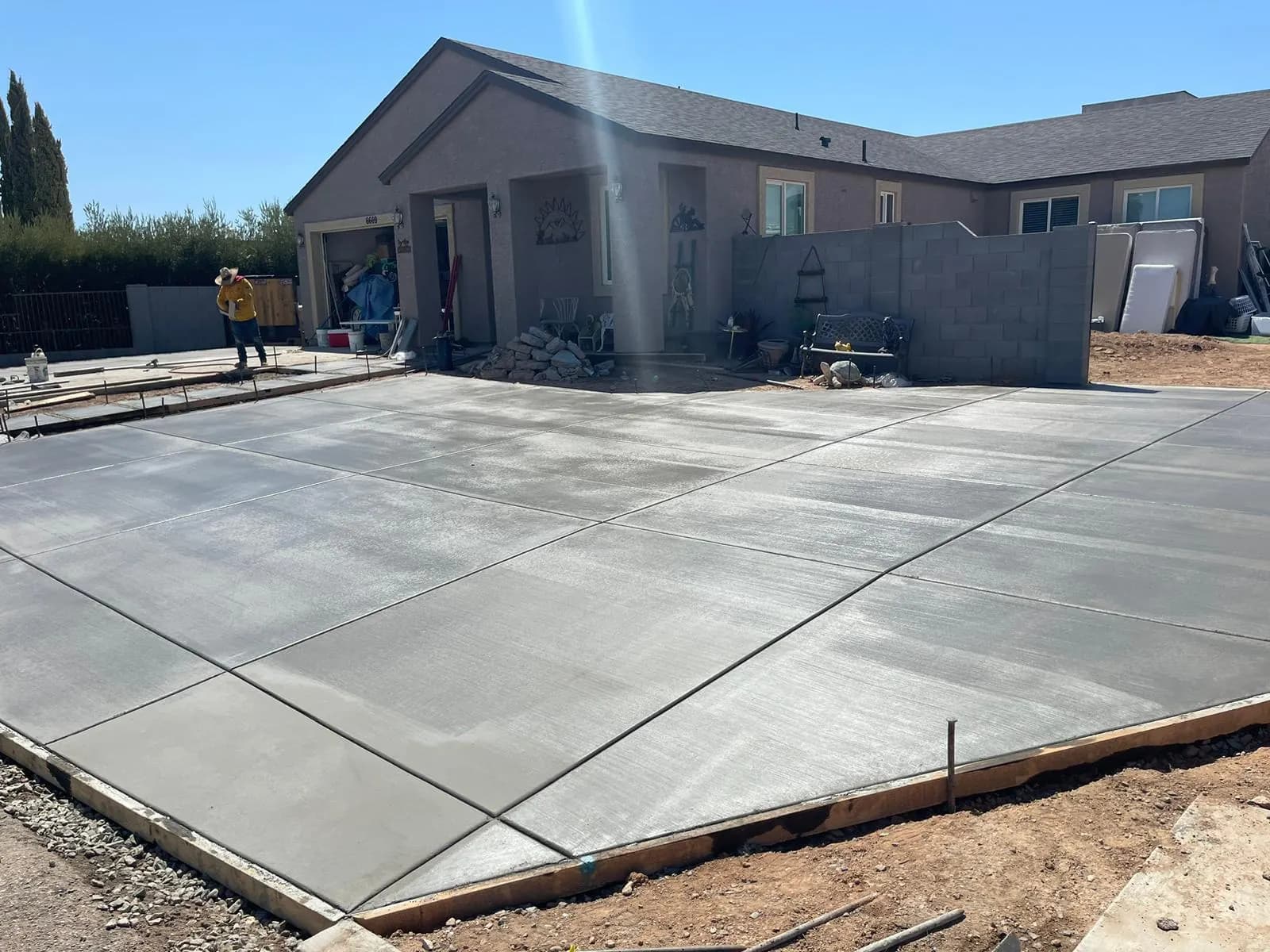
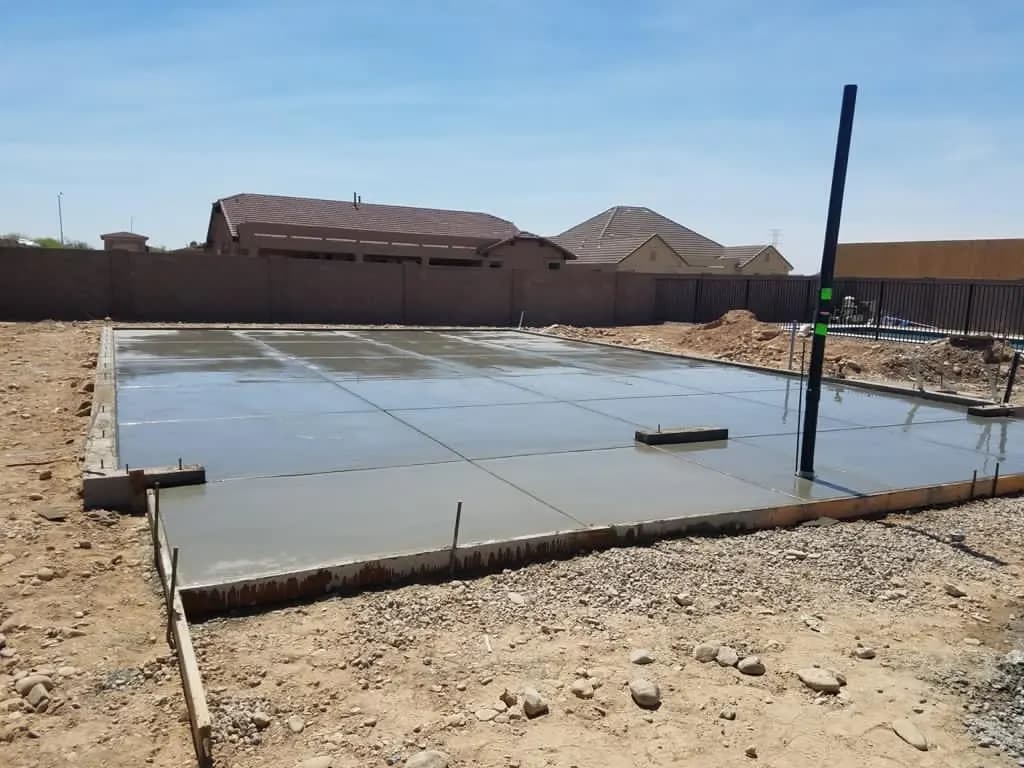
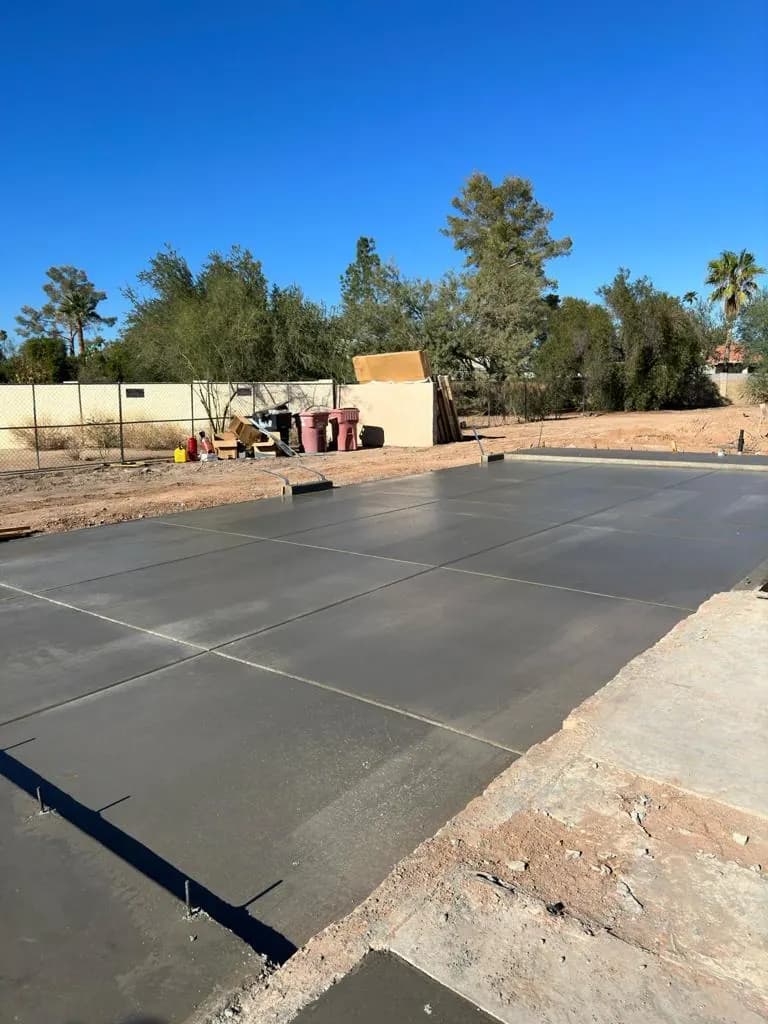
SM Construction LLC pours slabs of all sizes across Phoenix and the surrounding Valley — from a small equipment pad to large open slabs that take a crew and a mixer truck a full day to place and finish.
What This Work Solves
The slab has to carry a specific load
A slab under a garden shed and a slab under a loaded work vehicle are not the same slab. Thickness, base depth and reinforcement are chosen for the actual load rather than applied by default — which matters both for slabs that need to be stronger and for ones that do not need to be over-built.
It has to be genuinely flat
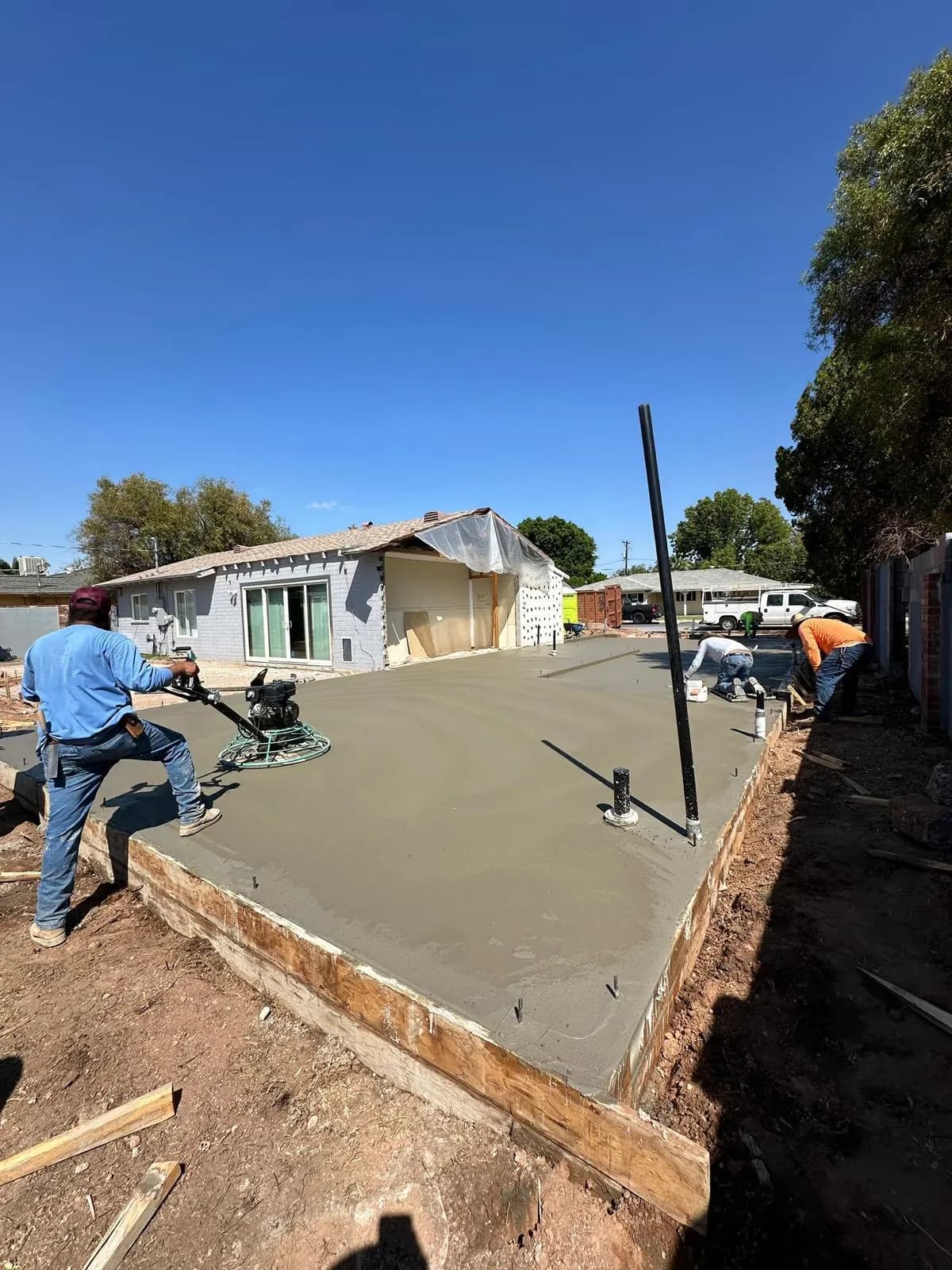
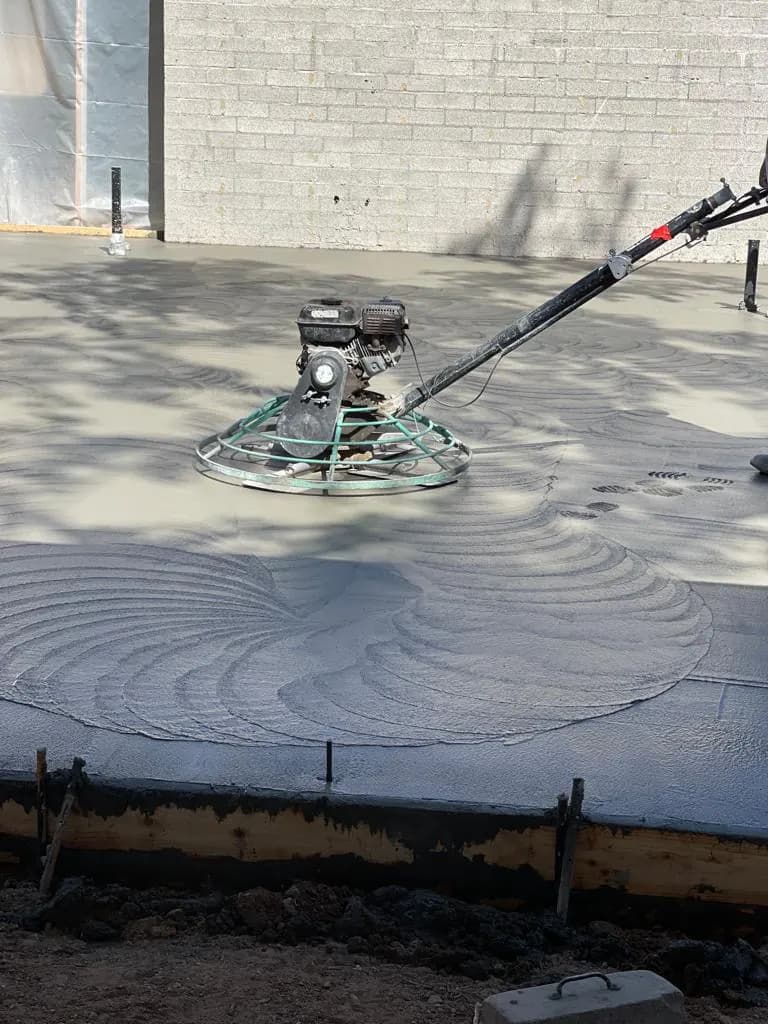
Anything that gets bolted down, rolled across or built on top needs a slab that is flat and level to a real tolerance, not approximately so. Screeding and power-trowel finishing are what get it there on larger pours.
It has to stay where it was poured
Slabs move when what is under them moves. Excavating to the right depth, using the right base material and compacting it properly is the difference between a slab that stays flat and one that settles at a corner.
It has to tie into what is already there
Most slabs meet an existing driveway, patio, wall or building. Elevation, jointing and how the two surfaces meet all have to be planned before the pour rather than resolved during it.
Projects We Take On
This page also covers concrete pouring & finishing, concrete extensions.
- Shed, shop and outbuilding slabs
- Slabs for room additions and casitas
- Equipment pads for HVAC units, generators and tanks
- Vehicle and trailer parking slabs
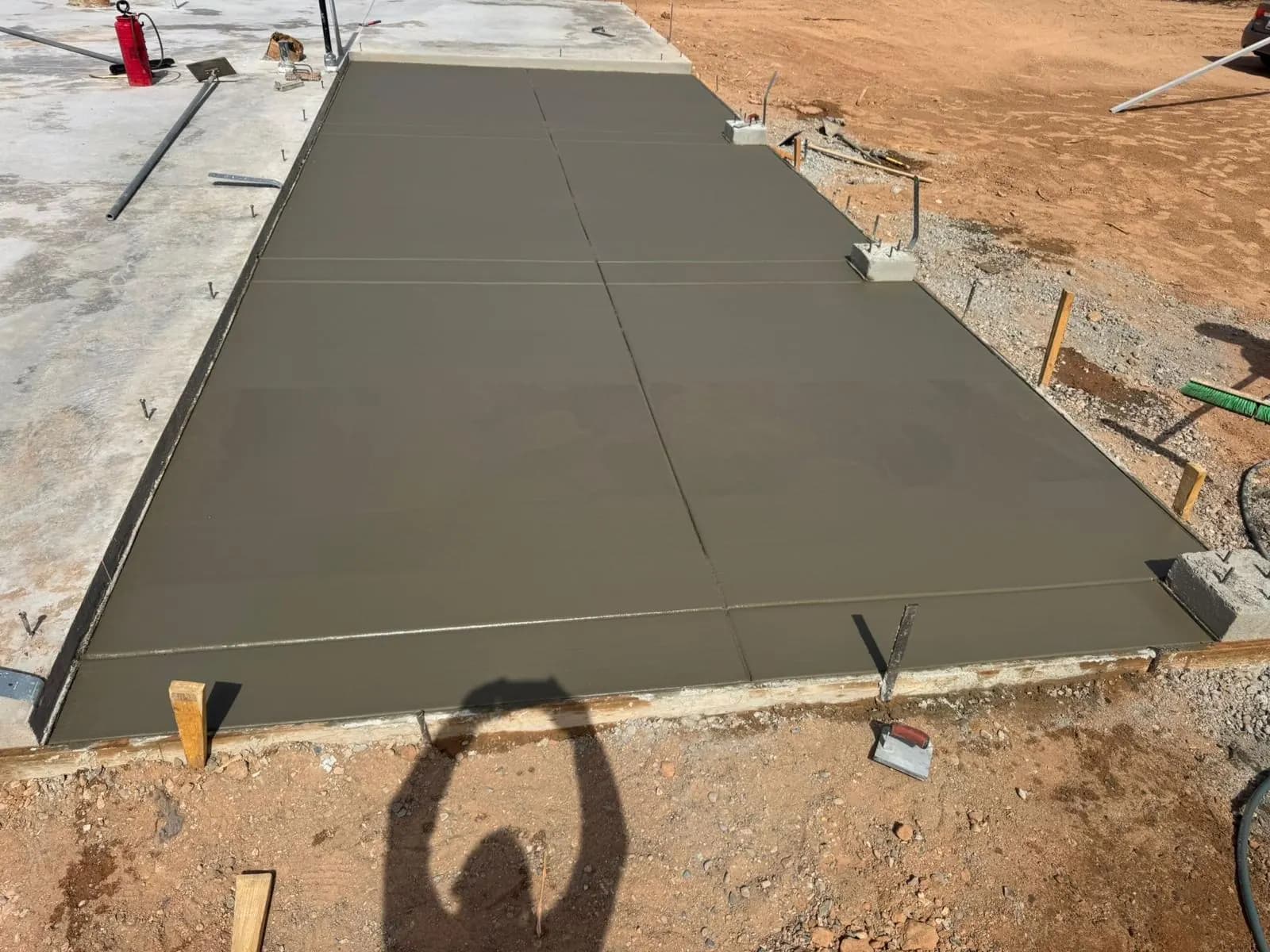
- Slab extensions joining an existing concrete area
- Large open slabs for commercial and storage use
- Slabs poured within block stem walls
- Side-yard and utility pads
How We Do It
Confirm the load and the layout
We start from what is going on the slab, because that decides thickness, base and reinforcement — not the other way round.
Excavate and grade
The footprint is excavated to depth and graded, with drainage away from any adjacent structure established at this point.
Place and compact base
Base material is brought in, spread and compacted to give uniform support across the whole footprint.
Form, reinforce and set elevations
Forms are set and checked for level, and reinforcement is placed and supported at the correct height within the slab.
Place, screed and finish
Concrete is placed and screeded flat, then floated and finished. Larger slabs are power-trowelled for a tighter, flatter surface.
Joint and cure
Control joints are cut on a layout suited to the slab's size and shape, and curing is managed before the slab is put into service.
Concrete Slabs: Common Questions
What thickness does my slab need to be?
It depends entirely on what the slab has to support. A pad for a small shed and a slab for a workshop with a vehicle in it call for different thickness, base depth and reinforcement. Tell us what is going on it and we will specify the slab in your estimate rather than pouring a default.
Do you pour slabs inside an existing block stem wall?
Yes. Pouring within an existing stem wall or foundation is common on additions and outbuildings, and we work to the elevation the wall establishes.
Can a new slab be joined to an existing one?
Yes, and it is one of the most common requests we get. The two are jointed where they meet so that movement in one does not crack the other. As with any concrete poured at different times, expect some visible difference in color between old and new.
How much site preparation is included?
Excavation, base material, grading and compaction are part of the slab work and are included in the estimate. If a site needs something beyond that — significant fill, drainage work or removal of an existing structure — we will identify it when we walk the site rather than raise it once work has started.
Where We Pour Concrete Slabs
Serving Phoenix and surrounding communities throughout the Valley. Concrete Slab work is available across the metro area.
- Phoenix
- Glendale
- Peoria
- Surprise
- Buckeye
- Goodyear
- Avondale
- Scottsdale
- Mesa
- Chandler
- Gilbert
- Queen Creek
Related Concrete Services
- Concrete FoundationsFootings, stem walls and monolithic foundation slabs poured to plan for new builds, additions and outbuildings.
- Garage SlabsFlat, hard-wearing floors for garages, shops and workspaces, finished to suit vehicles, equipment or a coating.
- RV PadsConcrete built for the actual weight and turning radius of a coach, trailer or boat — not a driveway that happens to be long.
- Commercial ConcreteSite concrete for commercial properties, and a licensed, bonded and insured concrete subcontractor for general contractors and property managers.
Planning a Concrete Project?
Tell us what you're building and request a free estimate from SM Construction LLC.
Licensed · Bonded · Insured · Arizona ROC #358800